ABOUT THE AUTHOR
ZACHERY DYKE
Spearo, fisherman, and passionate home cook. I enjoy harvesting my food from the ocean and sharing it with my friends and family. Follow along as I use species local to Florida to make incredible meals you can make at home.
How To Fillet A Porgy Video Tutorial
How To Fillet A Porgy In 10 Easy Steps
Breaking Down vs. Filleting A Porgy
Want to learn how to fillet a porgy? Unless I’m planning on eating my fish whole, I prefer completely breaking down my porgy rather than just fillet them. The reason is simple: you get so much more out of your fish when you take the time to properly process it. By fully breaking down the porgy, I can utilize every part of the fish, including the collars, head, and skin. This method allows me not only to maximize the yield but also to experiment with different cooking different parts of the fish.

While they aren’t always the biggest fish, it is still worthwhile to fillet porgy, as their delicate flavor and tender texture make them a great choice for various preparations. Many chefs and home cooks alike appreciate the versatility of this fish, which can be grilled, baked, and even eaten raw. Additionally, the filleting process can be quite rewarding, allowing for creative presentation ideas that can impress dinner guests or family. As a result, despite their modest size compared to other fish species, porgy remains a popular target for both casual fisherman and spearos.
What Do You Need To Fillet A Porgy?
1. Sharp Fillet Knife
A sharp fillet knife is essential to get the best cuts off of your porgy, as its precision allows for clean, effortless slicing that preserves the delicate texture of the fish. Using a well-maintained knife not only enhances the overall presentation but also ensures that every piece of meat remains intact and free from bones, contributing to a more enjoyable dining experience. Additionally, a good fillet knife provides better control, allowing you to navigate around the fish’s unique contours and maximize your yield. Proper technique combined with a sharp blade can turn the often tedious task of filleting into a streamlined process.
2. A Serrated Knife
A serrated knife is key when breaking down any fish because it allows you to cut through parts of the fish that would otherwise damage your fillet knife. Its unique design features sharp, jagged edges that provide superior cutting power, making it especially effective for slicing through tougher scales, skin, and bones. This is crucial when working with different types of fish, as each variety presents its own challenges, and a serrated knife can help preserve the integrity of your fillets, ensuring a cleaner cut and reducing the risk of tearing. By using a serrated knife, not only do you enhance your efficiency in the kitchen, but you also improve the overall quality of the fish preparation, leading to better texture and presentation on the plate.
3. Kitchen Shears
A good pair of kitchen shears is essential in breaking down and filleting porgy because it allows you to cut fins and other parts of the fish that may be difficult with a knife. These specialized shears not only provide more control and precision when making intricate cuts, but they also save time and effort, making the entire process more efficient for both novice and experienced fishers alike. Additionally, unlike traditional knives, shears can easily tackle the tough connective tissues and various features of the fish that often require more strength and dexterity. Thus, investing in a high-quality pair of shears can enhance your overall fish preparation experience, leading to cleaner cuts and less mess during filleting.
4. Wooden Cutting Board
A wooden cutting board is essential for filleting porgy because it keeps your fish off potential harmful surfaces like plastic and allows for any excess moisture to be soaked up. Additionally, the natural fibers of the wood create a gentle surface that helps maintain the integrity of the fish’s delicate flesh during the filleting process, preventing unwanted bruising or tearing. Unlike plastic boards that can harbor bacteria in their grooves, wooden boards have natural antibacterial properties, making them a safer choice for handling raw seafood. The aesthetic appeal of a wooden cutting board also enhances the kitchen experience, providing a warm, rustic charm that can elevate your culinary space.
How To Fillet A Porgy Step By Step
Here are the 10 simple steps to completely fillet and break down a porgy, ensuring that you make the most of this delicious fish. Please use the above video for reference or the pictures in the tutorial below to follow along visually, as they provide valuable insights and clarity for each step in the process. As you navigate through these steps, take your time, there’s no trophy for going the fastest!
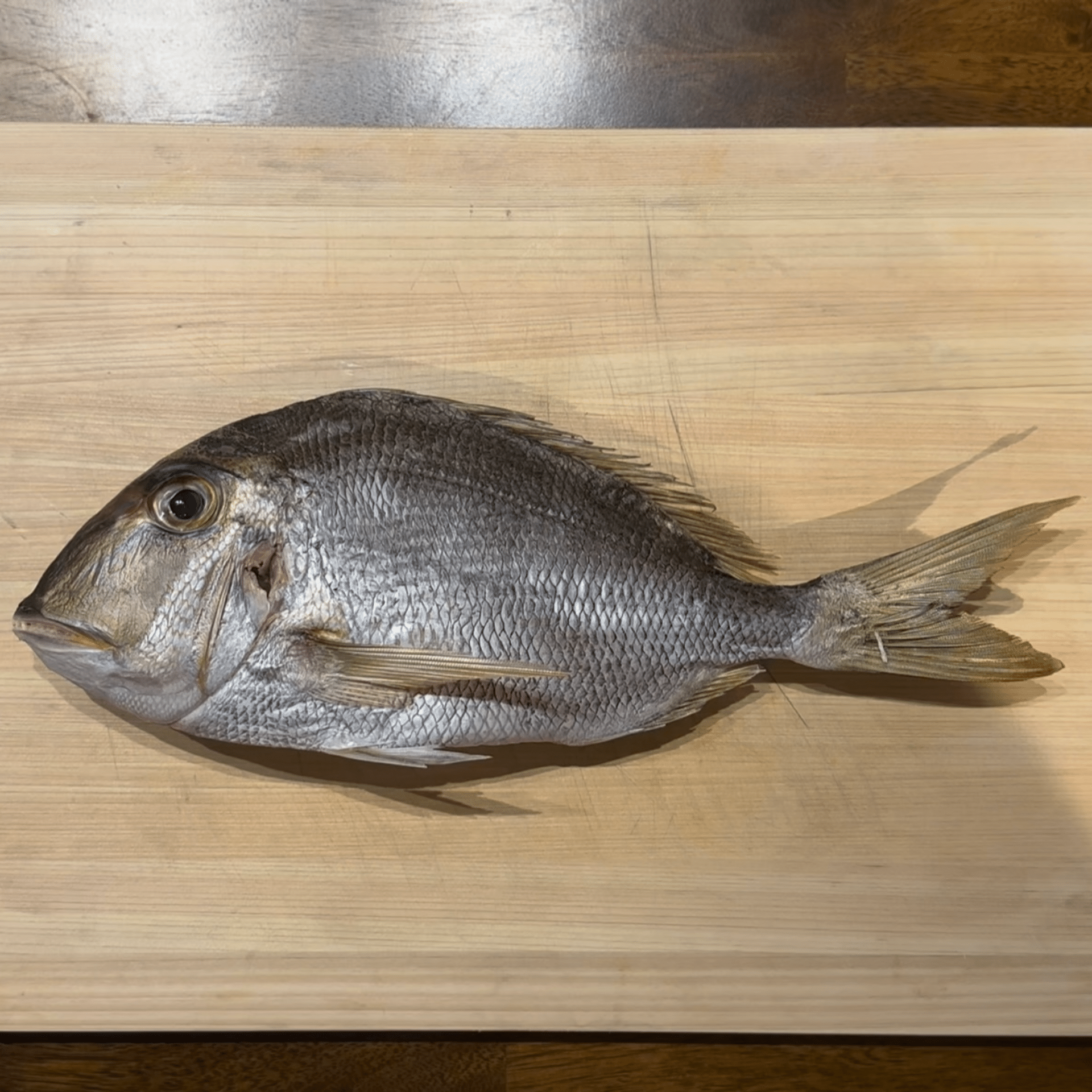
1. Make Sure Your Fish Is Bled, Gutted & Scaled
Properly preparing your fish by bleeding, gutting, scaling, and ensuring it is dry is essential for an easy fillet process. This preparation improves cut quality, enhances flavor and texture, and prevents a slippery fillet due to moisture, ultimately leading to better fillet process.

2. Remove The Left Fillet
Start by removing the left fillet of your porgy. Make a downward cut behind the pectoral fin, then outline the fish’s body carefully while keeping your knife at the right angle for a clean cut. Work your way down from the top of the fish to the spine, first, and then all the way through the ribs and out the bottom of the fish.

3. Remove The Left Collar
Separate the left collar from the head by cutting below the bone that holds it on. You may also have to release it from the throat area as well.
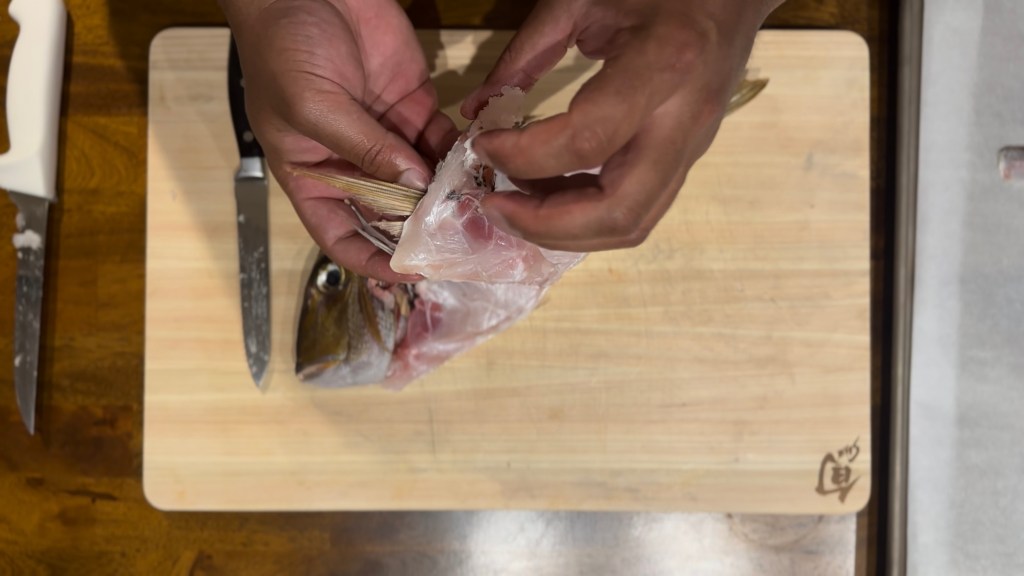
4. Remove The Head
Use your serrated knife to cut the head off your porgy. Make a firm cut right through the backbone. Because these fish are not that big it shouldn’t be difficult.

5. Remove The Right Fillet
Repeat the process shown in step 2 for the right fillet.

6. Remove The Right Collar
Repeat the process shown in step 3 for the right collar.
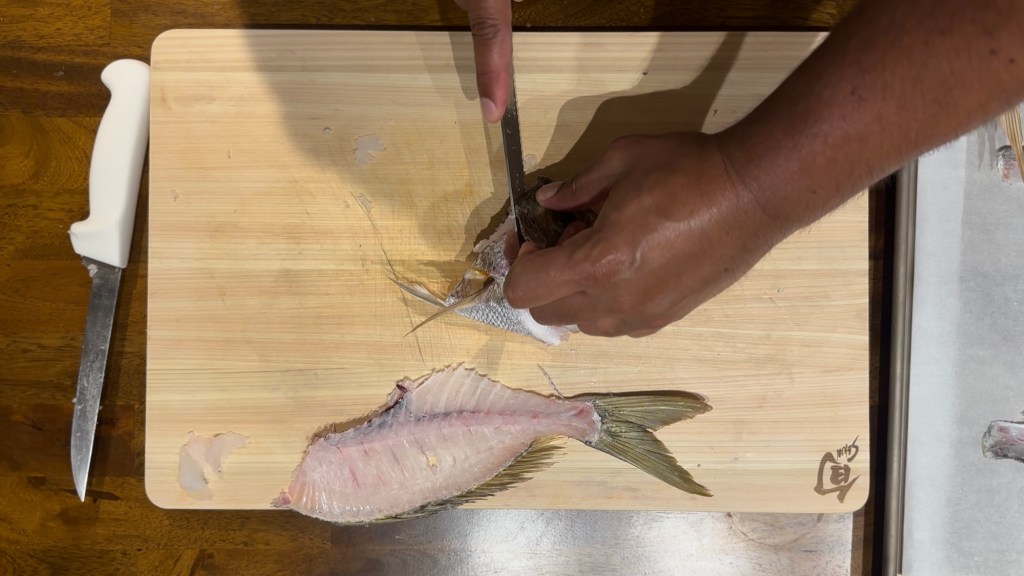
7. Scrape The Backbone
Using a spoon or other similar utensil, scrape any remaining meat off of the backbone of the porgy backbone.
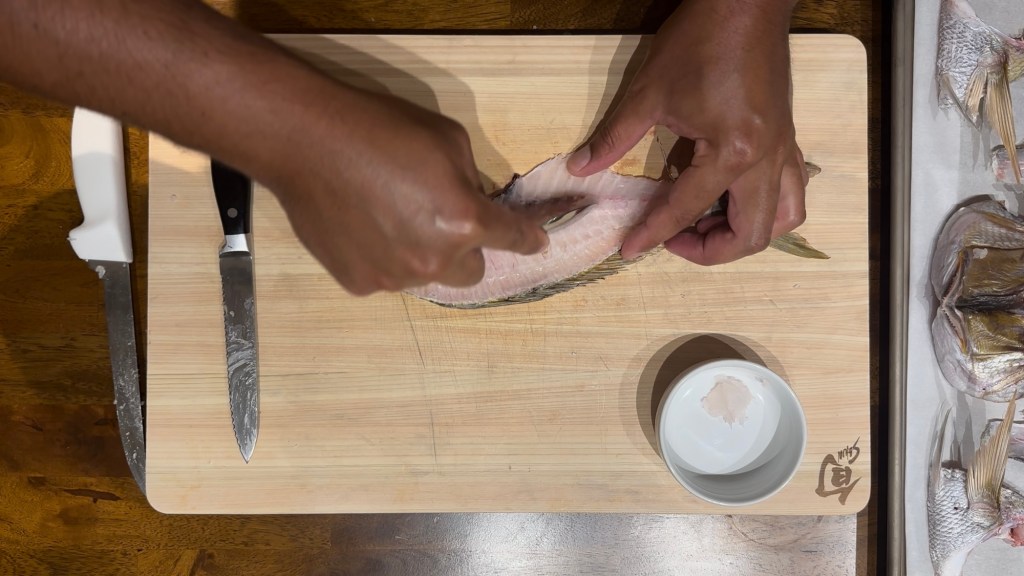
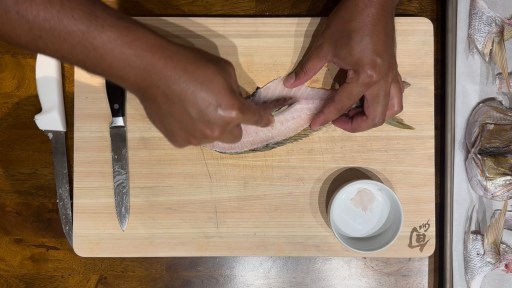
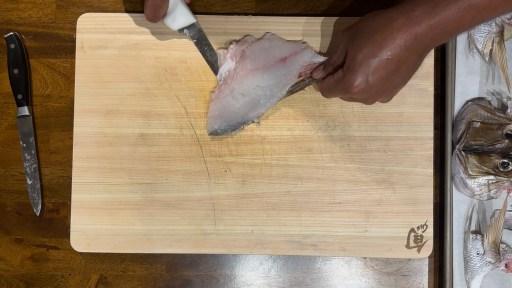
8. Remove The Skin
Place your knife between the skin and the fillet at a slight downward angle and work your way down the fillet. Be careful not to angle your knife too much and cut through the skin! Repeat this for both sides.

9. Remove The Ribs
Carefully remove the ribs from both sides, ensuring that you removed all of the bones from the fillet.
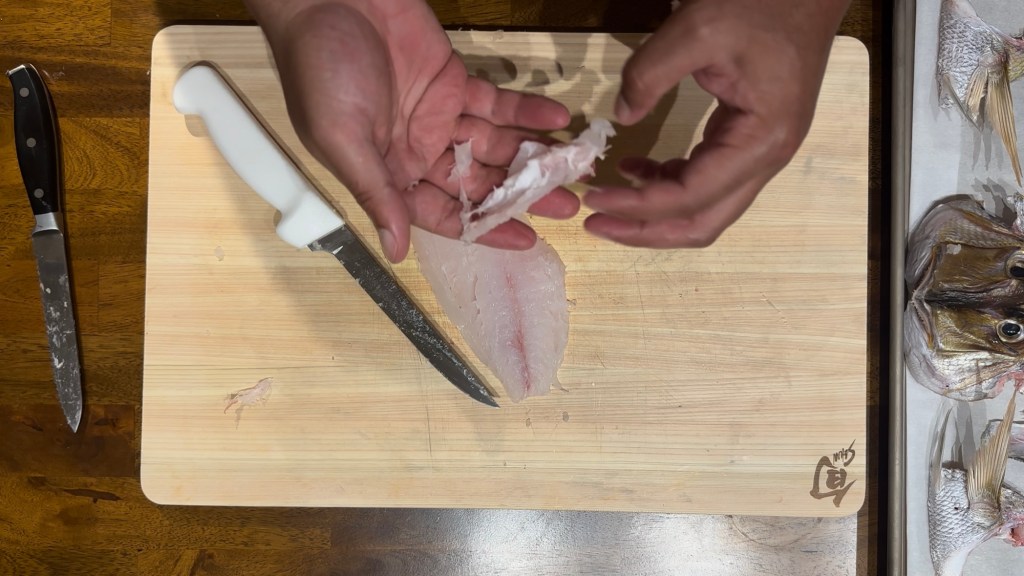
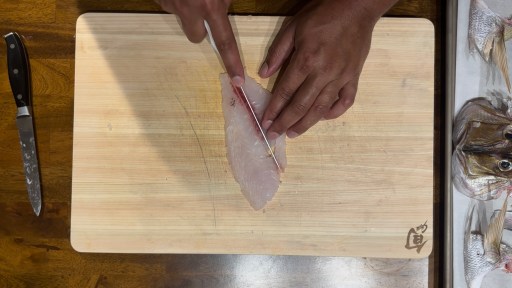
10. Remove The Bloodline & Pin Bones
Remove the bloodline and pin bones from the fillet to ensure the fillet is completely boneless.

Porgy Recipe Ideas
How To Use Porgy “Off Cuts”
After completely breaking down your porgy, you’ll be left with parts that you may have not used before. These parts include the porgy collars, head, ribs, and skin, each of which can be transformed into delicious dishes that highlight their unique flavors. For instance, the collars are rich in meat and can be grilled or pan-seared to perfection, while the head can be used to create a deeply flavorful stock that forms the base of many soups.

The ribs, often overlooked, are perfect for a hearty fish stew, where their firm texture holds up beautifully against simmering vegetables and spices. The skin, when properly prepared, can add a delightful crunch and flavor when fried until crispy. Spearos Kitchen has a recipes page dedicated to porgy that shows a few different preparation methods, including how to make a rich fish broth that utilizes every part of the fish, minimizing waste and maximizing flavor in your culinary creations.
Our Porgy Recipes
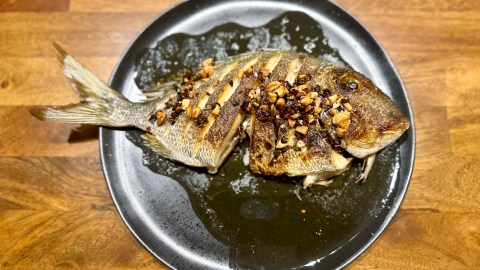
Here are a few of our unique porgy recipes that use different parts of the fish, showcasing the versatility of this delicious catch. From the tender fillets that can be used in sushi rolls to the flavorful head and bones that make a rich broth, each recipe highlights the distinctive qualities of porgy. To see our all of our recipes use our Fish Recipes Database.

 Zachery Dyke
 Zachery Dyke
 Zachery Dyke
 Will Levatino
 Zachery Dyke