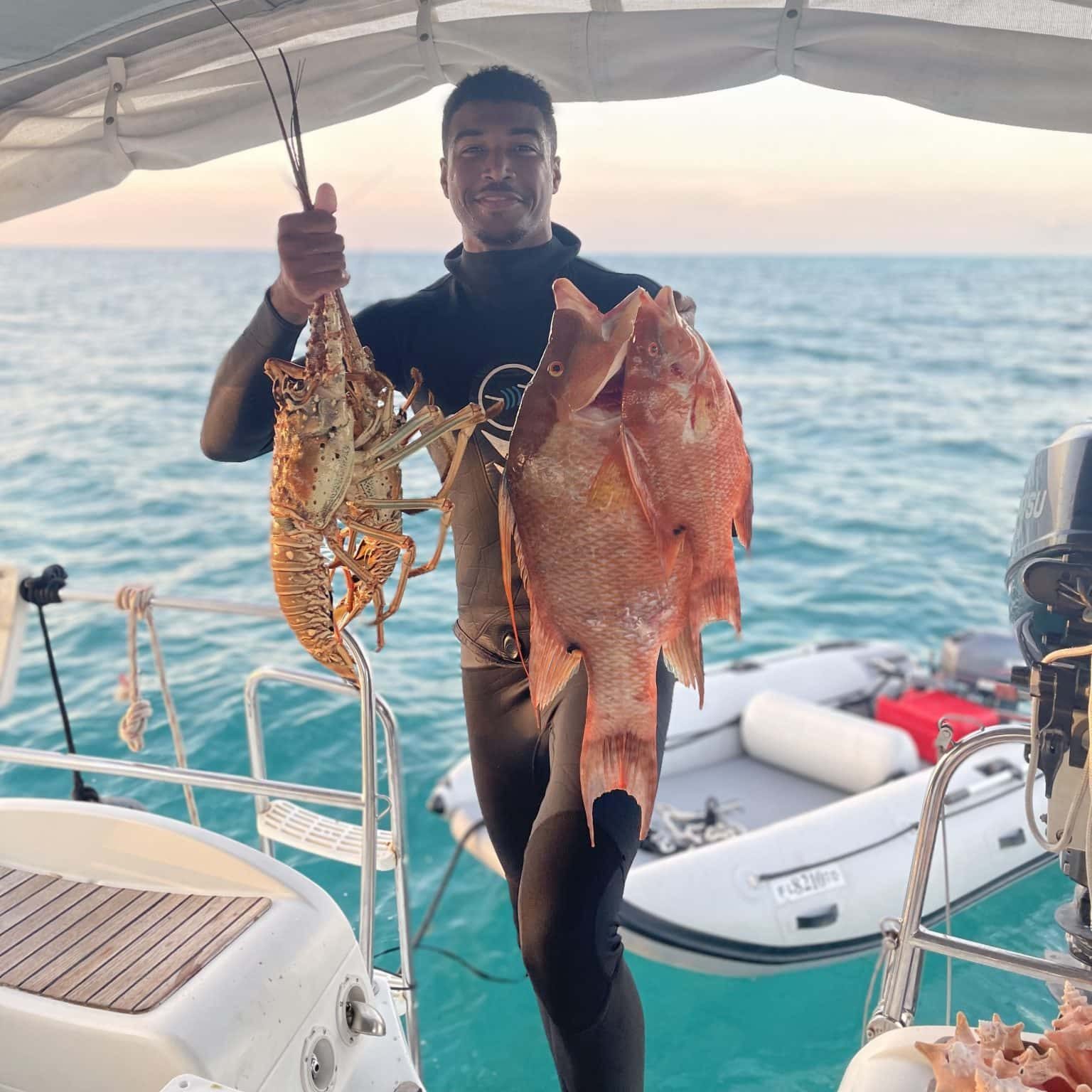
Spiny Lobster

About Spearos Kitchen
Spearos Kitchen is an ocean to table education platform focused on helping the recreational spearfishing and fishing communities responsibly utilize their catch through recipes, species guides, fillet tutorials, and educational content.
Name
Spiny Lobster
Edibility
Excellent
Taste
Sweet, Briny
Texture
Firm, Dense

Quick Facts
- Scientific Name: Panulirus argus
- Family: Spiny Lobster (Palinuridae)
- Habitat: Coral reefs, rocky ledges, seagrass beds, mangrove shorelines, and hard-bottom habitats throughout the western Atlantic, Caribbean, and Gulf of America.
- Maximum Size: Up to 24 inches (61 cm) in total length and 10 pounds (4.5 kg), though most legally harvested lobsters are much smaller.
- Table Fare: Widely regarded as one of the finest seafood delicacies, with sweet, firm, tender meat that is excellent grilled, broiled, baked, steamed, or served chilled in salads, pasta, and lobster rolls.
What is a Spiny Lobster?
Florida spiny lobster (Panulirus argus) is a large crustacean found throughout the warm waters of the western Atlantic, Caribbean, and Gulf of America. Unlike the American lobster, spiny lobsters do not have large front claws. Instead, they rely on their long, spiny antennae for defense and are commonly found hiding beneath rocky ledges, coral reefs, and in seagrass beds during the day before emerging at night to feed.

Spiny lobster is one of the most sought-after seafood species in Florida, prized for its sweet, firm tail meat and popular among both recreational divers and commercial fishermen. Its mild flavor and meaty texture make it incredibly versatile, lending itself well to grilling, broiling, steaming, pasta dishes, lobster rolls, and countless other recipes.
What Does Spiny Lobster Taste Like?
Florida spiny lobster has a sweet, delicate flavor with a firm, tender texture that is often compared to a cross between traditional lobster and crab. Its mild taste pairs well with simple preparations like grilling, broiling, or steaming, allowing the natural sweetness of the meat to shine.

How to Cook Spiny Lobster?
Recipes For Every Part
Our fish parts pages are designed to help you get the most out of every catch by highlighting often-overlooked cuts like collars, cheeks, ribs, heads, and frame meat. Whether you’re working with a fresh catch or store-bought fish, these guides show you how to turn every part into a delicious meal!


Lobstering Tips
- Know the Regulations: Always check your local season dates, bag limits, size requirements, and licensing rules before harvesting Florida spiny lobster to ensure you’re lobstering legally.
- Measure Properly: Measure lobsters in the water and only harvest legal-sized individuals to avoid unnecessary handling and stress on undersized lobsters.
- Use the Right Equipment: A tickle stick and handheld net are the preferred tools for gently coaxing lobsters from their hiding places without damaging the reef or injuring the animal. Lobster snares also work great, too!
- Handle Lobsters Carefully: Grasp the lobster firmly around the body behind the antennae and avoid pulling on the antennae or legs, which can injure the animal or cause it to escape.
- Respect the Habitat: Avoid breaking coral, moving rocks, or damaging seagrass while searching for lobsters. Responsible harvesting helps protect the habitats that support healthy lobster populations for future seasons.