
Skin

About Spearos Kitchen
Spearos Kitchen is an ocean to table education platform focused on helping the recreational spearfishing and fishing communities responsibly utilize their catch through recipes, species guides, fillet tutorials, and educational content.
Part
Fish Skin
Edibility
Good
Taste
Rich, Savory
Texture
Oily, Crunchy

Quick Facts
- Also Known As: Crispy Fish Skin, Fish Cracklings
- Best Uses: Frying, searing, baking, air frying, and making crispy snacks or garnishes.
- Best Species: Snapper, grouper, salmon, mahi-mahi, striped bass, branzino, and other fish
- Flavor & Texture: Mild and savory with a rich, slightly buttery flavor. When cooked properly, the skin becomes crispy while retaining a delicate layer of tender meat underneath.
- Why It’s Special: It’s packed with flavor, collagen, and healthy omega-3 fatty acids, making it one of the most nutritious and delicious parts of the fish. Properly cooking also helps reduce waste by using more of your catch.
What is Fish Skin?
Fish skin is the outer protective layer that covers a fish’s body, shielding it from injury, parasites, and the surrounding environment. Depending on the species, fish skin can vary in thickness, texture, and fat content, with oily fish like salmon having richer skin and lean species like snapper and grouper offering a milder flavor. When left on the fillet, the skin also helps hold the fish together during cooking while locking in moisture.
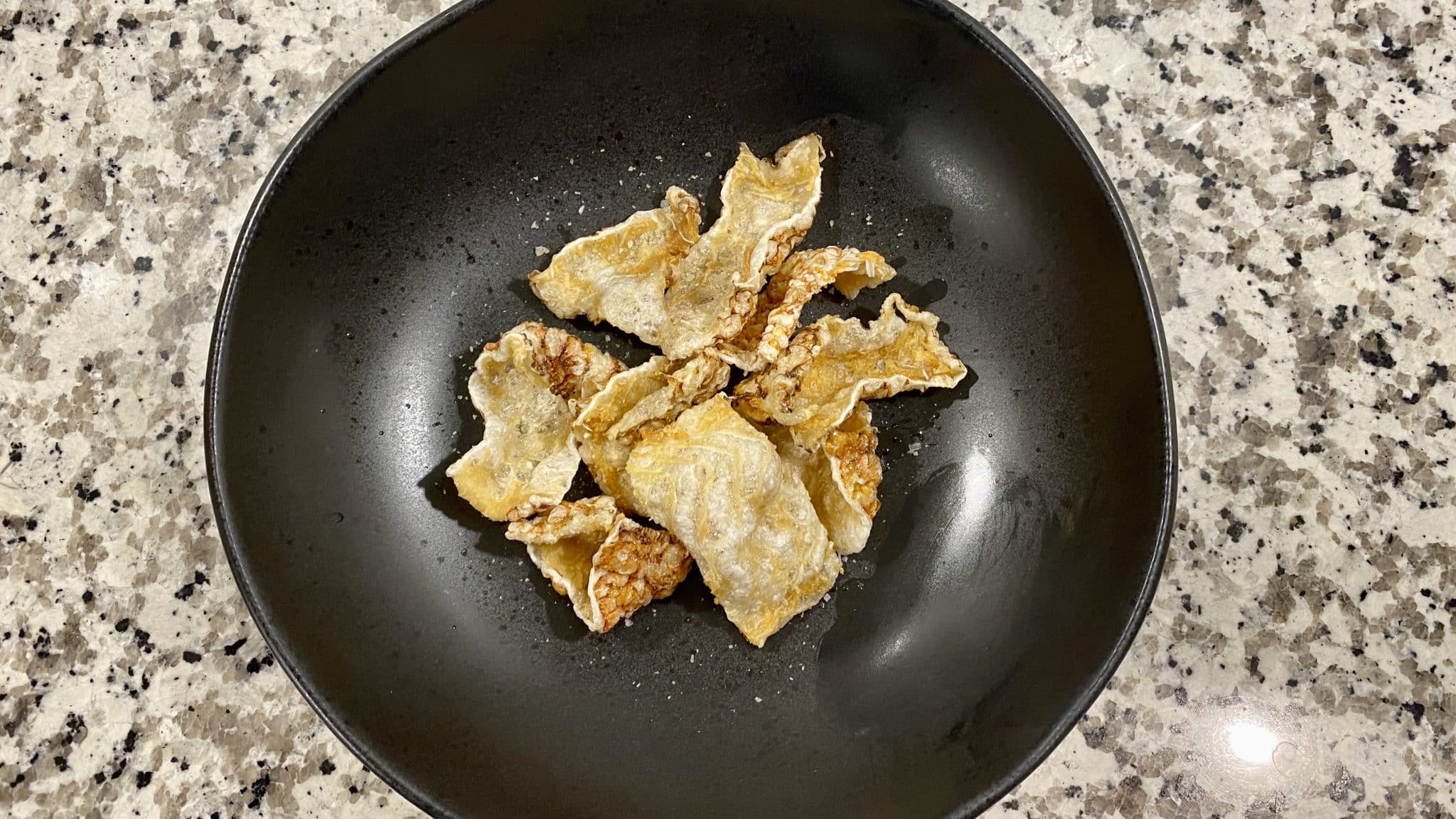
Although many people remove fish skin before cooking, it’s considered a delicacy in many places around the world. When grilled, pan-seared, baked, or fried, properly prepared fish skin becomes golden and crispy while adding rich flavor and a satisfying crunch. It’s also packed with collagen, healthy fats, and nutrients, making it one of the most flavorful and nutritious parts of the fish.
What Does Fish Skin Taste Like?
Fish skin has a mild, savory flavor that reflects the fish it’s attached to, often with a richer taste than the fillet itself. Lean species like snapper, grouper, and mahi-mahi have delicate, slightly sweet skin, while oilier fish such as salmon offer a more buttery, full-bodied flavor. Much of the skin’s appeal comes from the thin layer of flavorful meat and natural fats that remain attached during cooking.
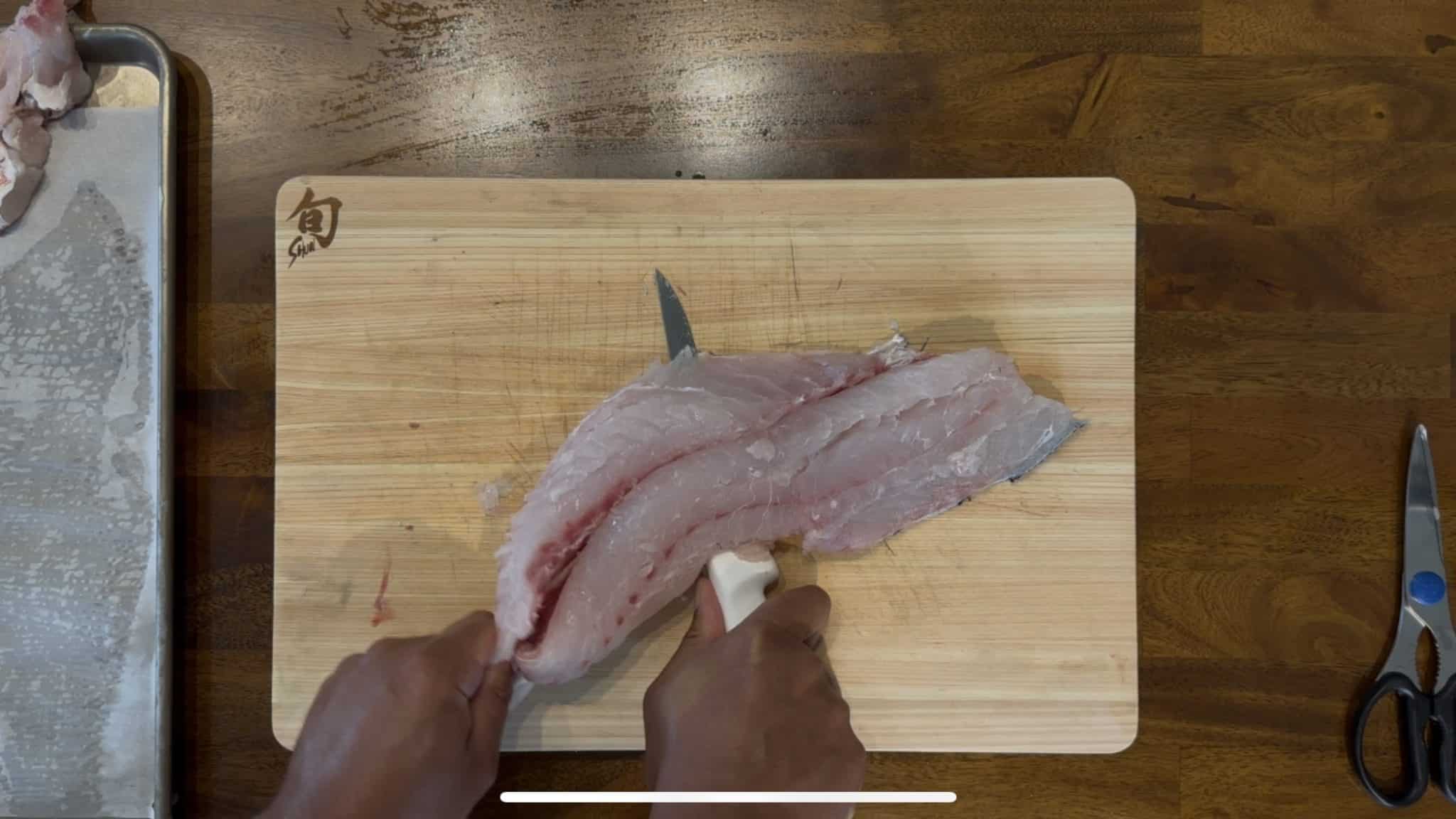
The texture of fish skin changes dramatically depending on how it’s prepared. When pan-seared, grilled, or fried, it becomes light, crispy, and slightly crunchy, making it one of the most sought-after parts of the fish. If cooked improperly, however, the skin can become chewy or rubbery, so high heat and a dry surface are key to achieving perfectly crisp results.
How to Cook Fish Skin
- Pan-Sear: Place the fillet skin-side down in a hot, lightly oiled skillet and cook until the skin is golden brown and crispy before briefly finishing the flesh side.
- Grill: Grill skin-side down over medium-high heat to crisp the skin while protecting the delicate flesh from sticking and drying out.
- Bake: Bake at 400°F (205°C) until the outside becomes lightly crisp and the fish flakes easily, then finish under the broiler for extra crunch if desired.
- Fry: Coat skin-on fillets lightly with seasoned flour or batter and fry until crisp and golden, creating a crunchy exterior with a rich, savory flavor.


