
Whole

About Spearos Kitchen
Spearos Kitchen is an ocean to table education platform focused on helping the recreational spearfishing and fishing communities responsibly utilize their catch through recipes, species guides, fillet tutorials, and educational content.
Part
Whole Fish
Edibility
Excellent
Taste
Rich, Bold
Texture
Flaky, Tender

Quick Facts
- Also Known As: Whole Round Fish, Dressed Fish (if gutted and scaled)
- Best Uses: Grilling, roasting, baking, steaming, frying, and smoking.
- Best Species: Snapper, grouper, branzino, trout, pompano, striped bass, yellowtail, and other small to medium-sized fish.
- Flavor & Texture: Cooking a fish whole helps retain moisture, resulting in tender, flaky meat with a rich, natural flavor.
- Why It’s Special: Whole fish delivers the best overall eating experience by protecting the delicate flesh during cooking while allowing you to enjoy prized cuts like the cheeks, collars, ribs, and skin. It’s also one of the most efficient ways to minimize waste and make the most of your harvest.
What is Whole Fish?
A whole fish is a fish that is cooked and served largely intact, typically with the head, skin, bones, and tail still attached. Depending on the recipe, the fish may be scaled, gutted, and cleaned before cooking, but it remains whole rather than being cut into fillets or steaks. Cooking fish this way helps protect the delicate meat, allowing it to retain more moisture and develop a richer, more natural flavor.
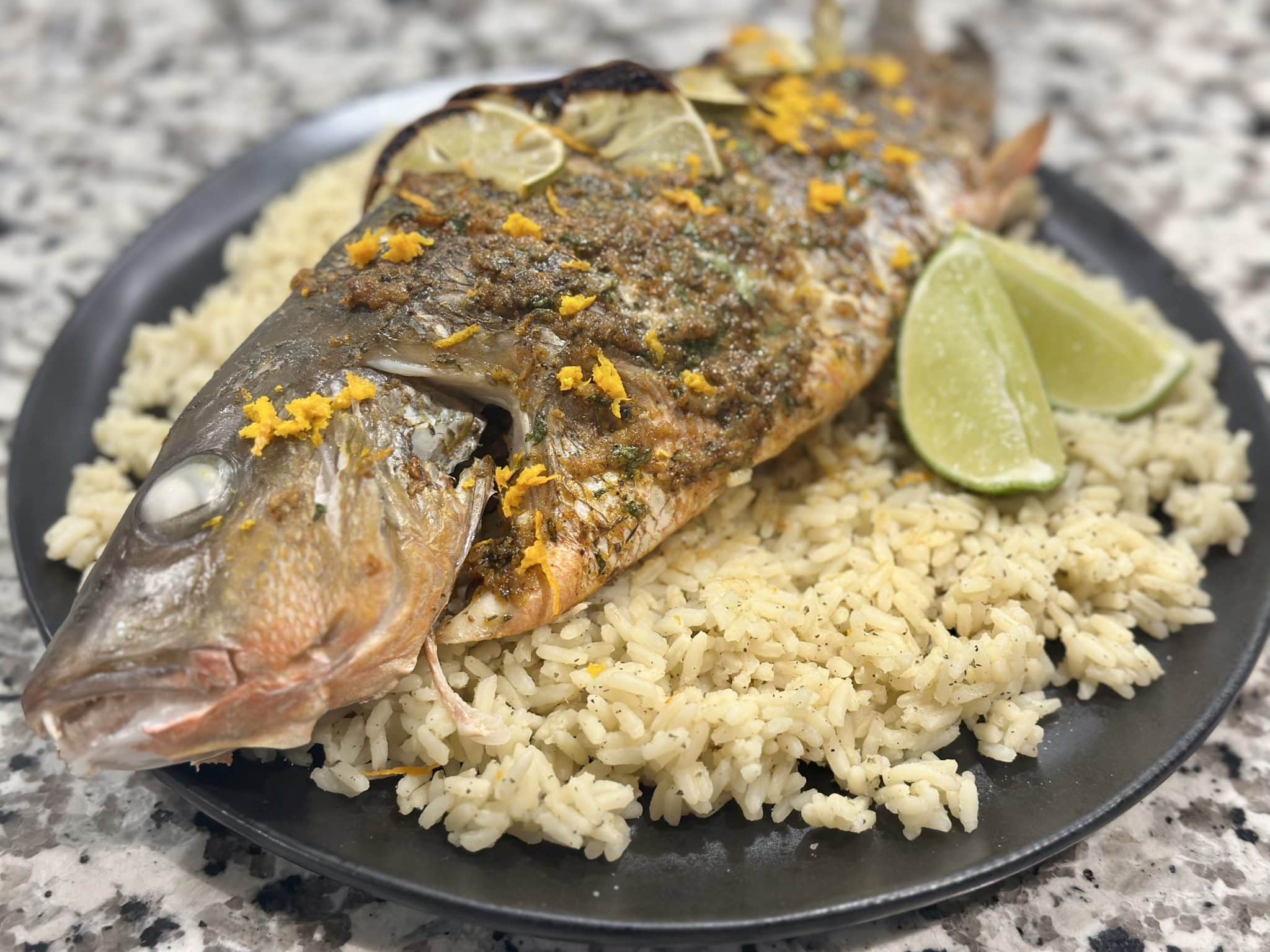
Preparing a fish whole is one of the best ways to make the most of your catch, as it lets you enjoy flavorful cuts like the cheeks, collars, ribs, and crispy skin in addition to the fillets. Whole fish can be grilled, baked, roasted, steamed, smoked, or fried, making it a versatile cooking method that’s popular in cuisines around the world.
What Does Whole Fish Taste Like?
Whole fish has the same clean, fresh flavor as fillets, but it often tastes richer and more flavorful because the meat is cooked on the bone and protected by the skin. The bones, skin, and natural fats help retain moisture throughout the cooking process, resulting in tender, juicy flesh with a delicate texture. The exact flavor depends on the species, with mild fish like snapper and grouper offering a sweet, flaky taste and oilier fish providing a richer, more robust profile.

Cooking a fish whole also gives you access to some of its most prized cuts, including the cheeks, collars, ribs, and crispy skin, each offering unique textures and deeper flavor than the fillets alone. When grilled, roasted, or fried, the skin becomes crisp while the meat remains succulent, creating a well-balanced bite that many spearos consider the best way to enjoy fresh fish.
How to Cook Whole Fish
- Grill: Score the skin, season generously, and grill over medium-high heat until the skin is crispy and the flesh flakes easily from the bone.
- Bake: Bake at 400°F (205°C) with herbs, lemon, and olive oil until the thickest part of the fish reaches an internal temperature of 145°F (63°C).
- Steam: Steam the whole fish with aromatics like ginger, scallions, and garlic until the meat is opaque, tender, and easily separates from the bones.
- Fry: Coat the fish lightly with seasoned flour or cornstarch and fry until the skin is golden and crispy while the meat remains moist and flaky inside.


