
Yellow Jack

About Spearos Kitchen
Spearos Kitchen is an ocean to table education platform focused on helping the recreational spearfishing and fishing communities responsibly utilize their catch through recipes, species guides, fillet tutorials, and educational content.
Name
Yellow Jack
Edibility
Excellent
Taste
Mild, Clean
Texture
Firm, Flaky
Ciguatera
High Risk
Peak Dry Age
Day 7-10

Quick Facts
- Scientific Name: Carangoides bartholomaei
- Family: Jack (Carangidae)
- Habitat: Coral reefs, rocky ledges, wrecks, and nearshore to offshore hard-bottom habitats throughout the western Atlantic, Caribbean, and Gulf of America.
- Maximum Size: Up to 40 inches (102 cm) and 25 pounds (11 kg), though most caught fish weigh between 5–15 pounds.
- Table Fare: Excellent table fare with firm, mildly sweet white flesh that is well-suited for grilling, smoking, frying, baking, ceviche, and sashimi when properly handled.
What is a Yellow Jack?
A yellow jack is a fast-swimming member of the jack family found throughout the tropical and subtropical waters of the western Atlantic Ocean, including Florida, the Caribbean, and the Gulf of Mexico. Recognized by its streamlined body and distinctive yellow stripe running along its side, the yellow jack is commonly found around reefs, wrecks, offshore structures, and clear coastal waters. These fish are known for their speed and powerful runs, making them a popular target for anglers and spearfishermen alike.
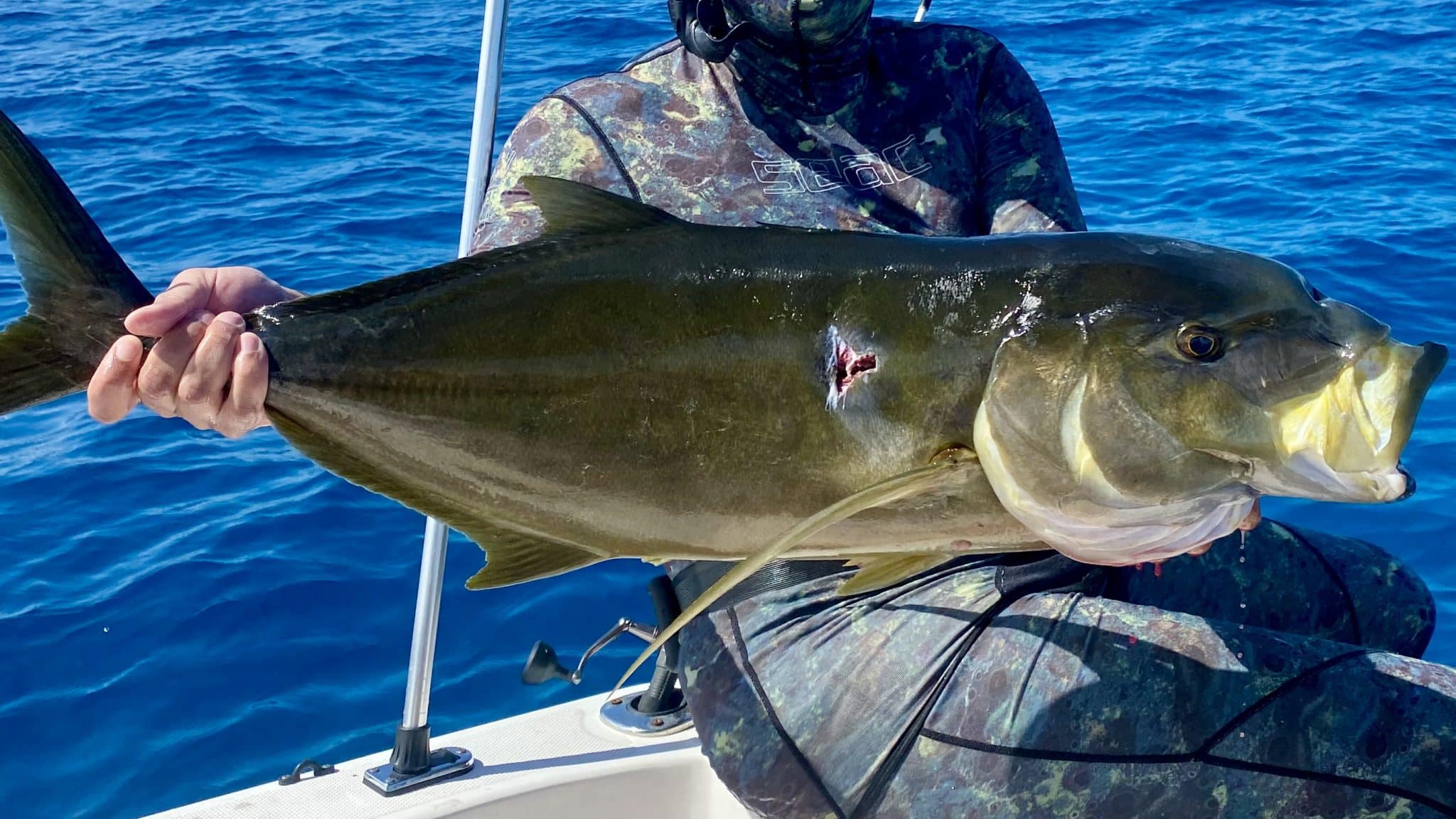
Yellow jack are also valued as table fare thanks to their firm, mild-flavored flesh. Their meat is versatile and can be grilled, baked, fried, blackened, or served raw in dishes such as ceviche and poke when properly handled. Because yellow jack often travel in schools and inhabit a variety of depths, they are both an exciting fish to catch and a versatile species to prepare in the kitchen.
What Does Yellow Jack Taste Like?
Yellow jack has a mild, clean flavor that is often compared to other popular reef and pelagic fish. The flesh is firm, white, and slightly sweet, with a richer taste than snapper but milder than stronger-flavored species such as mackerel or bluefish. Because of its meaty texture, yellow jack holds together well during cooking and is suitable for a wide range of preparations.

Many anglers consider YJ to be underrated table fare due to its versatility and pleasant flavor. The fish readily absorbs marinades, seasonings, and sauces while still retaining its natural taste. Whether grilled over an open flame, blackened in a cast-iron skillet, fried into fish tacos, or served raw as ceviche or poke, YJ provides a flavorful and satisfying meal!
How to Cook Yellow Jack

Recipes For Every Part
Our fish parts pages are designed to help you get the most out of every catch by highlighting often-overlooked cuts like collars, cheeks, ribs, heads, and frame meat. Whether you’re working with a fresh catch or store-bought fish, these guides show you how to turn every part into a delicious meal!


Spearfishing Tips
Yellow jack are fast, schooling reef fish found around drop-offs, wrecks, and coral edges in Florida and the Caribbean. They’re often seen cruising in loose groups, moving quickly through clear water and reacting to pressure changes and diver movement.

For spearfishing, approach low and steady along the reef and avoid sudden movements that scatter the school. They tend to circle back out of curiosity, giving brief windows for a clean broadside shot before they slip back into deeper water.


